
Why Contractors Rely on Crushed Stone More Than Ever

Crushed stone remains one of the most reliable and versatile materials in construction. It provides strength, stability, and durability across a wide range of applications — from road bases and rail systems to drainage and shoreline protection. With infrastructure spending on the rise and supply conditions shifting, it continues to be a material every contractor depends on.

What is Crushed Stone?

Crushed stone is created by mechanically breaking down larger rocks such as limestone, dolomite, granite, or trap rock into angular pieces. Because the fragments are jagged rather than rounded, they lock together when compacted, forming a stable surface that can withstand heavy loads. This makes crushed stone an essential material for building strong foundations, road bases, and drainage systems.

Key Applications

Road and Highway Bases

Crushed stone forms the foundation for most road projects. Its angular shape allows it to compact tightly, distributing weight, and preventing shifting under heavy traffic.

Railroad Ballast

Rail lines use crushed stone ballast to stabilize tracks, promote drainage, and suppress vegetation. Its interlocking structure keeps rails firmly in place.

Drainage and Utility Bedding

Clean, washed stone is widely used for drainage systems, French drains, and utility bedding. Its size and shape allow water to pass freely while supporting pipes and preventing clogging.

Shoreline and Erosion Control

Crushed stone is often paired with larger riprap to protect shorelines and embankments from erosion. It adds weight and stability to areas exposed to water flow.

Road Maintenance and Cement Production

In addition to new construction, crushed stone is used in road resurfacing and as a raw material in cement and asphalt manufacturing.

Choosing the Right Grade

Different grades of crushed stone are designed for specific purposes: 

  • #2 (2½–3 inches): Large stone used for road base, construction entrances, and erosion control.
  • #3 (½–2 inches): Versatile option for driveways, drainage layers, and road sub-base.
  • #57 (¾ inch): One of the most common sizes, used in concrete mixes, asphalt, driveways, and drainage projects.
  • #7 (½ inch): Smaller stone ideal for driveways, walkways, and landscaping where a smoother finish is desired.
  • #10 (stone dust/screenings): Fine material used under pavers, patios, and walkways to create a solid, compact base.

Market Conditions in 2025

The crushed stone market has been shaped by several key factors over the past year:

  • Production: U.S. output fell to about 1.5 billion tons in 2024, down 6% from 2023. Higher interest rates, fewer housing starts, and weather disruptions contributed to the decline.
  • Infrastructure Spending: Federal investment through the Infrastructure Investment and Jobs Act continues to drive demand for crushed stone in highways, bridges, and transit projects.
  • Regional Supply: Quarry restrictions near major cities are limiting local availability. Longer haul distances and higher fuel costs are raising overall project expenses.

Why Crushed Stone Remains Essential

Even as costs fluctuate, crushed stone continues to be the backbone of commercial and infrastructure projects. Its strength, reliability, and versatility make it indispensable for:

  • Roads and highways
  • Rail and transit systems
  • Utility infrastructure
  • Shoreline protection
  • Public works projects supported by federal funding

Final Takeaways

  • Use larger stone (#2, #3) for heavy-duty bases and erosion control.
  • Choose mid-sized stone (#57, #7) for concrete, drainage, and driveways.
  • Rely on screenings (#10) for paver bases and fine compaction work.
  • Plan for supply challenges and transportation costs, especially near urban centers.
  • Expect continued strong demand from infrastructure investment through 2026.

Crushed stone isn’t just another aggregate — it is the foundation of modern construction. With the right grade, proper planning, and attention to supply conditions, it delivers the strength and durability every project needs.
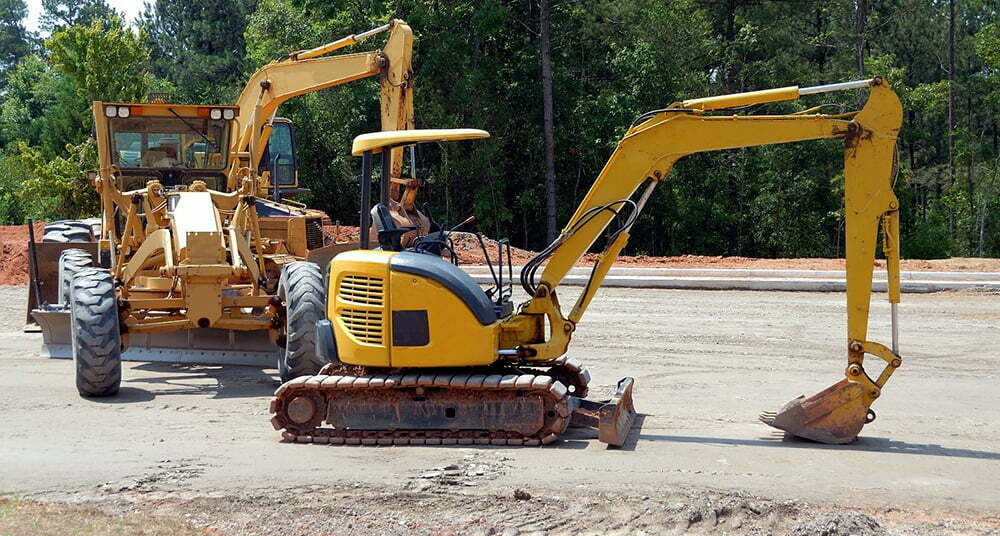
A Year in Review: How the Construction Industry Managed 2024–2025 (and What’s Ahead for 2026)

The U.S. commercial construction market remains a study in contrasts. Elevated material costs, workforce shortages, and tariffs continue to weigh on projects, yet demand in multifamily housing, commercial development, and technology-driven facilities like data centers has kept activity strong.

Here’s how the sector has fared over the past year and a half — and what lies ahead for the remainder of 2025 and into 2026. 

Material Costs: Still a Top Concern

High input costs remain one of the largest obstacles for contractors and developers. JLL reported that construction material prices rose between 7%–12% in 2025, reversing earlier signs of easing (For Construction Pros).

By mid-2025, the Producer Price Index showed inputs up 2.8% year-over-year, with building materials rising 3.3%. Machinery parts (+31%) and metal trim (+25%) posted some of the sharpest increases (NAHB Eye on Housing).

Tariffs have made matters worse, adding an estimated $7,500–$10,000 to the cost of a new home and significantly raising costs for commercial construction projects as well (AP News).

Workforce Challenges

Labor shortages remain a critical constraint. The Associated Builders and Contractors estimate the industry needs to attract 439,000 new workers in 2025, with demand climbing to nearly 499,000 in 2026 (ABC).

Immigration-related constraints have compounded the issue. The U.S. is experiencing just 1% annual immigration growth compared with the historic 3%, reducing the available skilled workforce (For Construction Pros).

For large industrial and infrastructure projects, this gap is particularly acute. Bechtel projects the Gulf Coast will need 80,000 additional skilled craft professionals by 2026—nearly double today’s workforce in the region (Wall Street Journal).

Market Activity: Commercial Growth with Headwinds 

The housing market set the tone for 2025, with housing starts rising 12.9% year-over-year in July and multifamily construction leading at +27% (Wall Street Journal). But with building permits down 5.7%, questions remain about sustainability into 2026.

For the commercial sector, growth is steady but modest. The AIA Consensus Forecast projects +1.7% spending growth in 2025, improving slightly to +2.0% in 2026. Commercial buildings are expected to see stronger performance, climbing from +1.5% growth this year to nearly +4% next year (HPAC Engineering).

Data Centers and Infrastructure: Driving Demand

The strongest momentum is coming from technology and infrastructure-related projects. Data centers are the fastest-growing commercial subsector, projected to expand 21.9% in 2025 and another 14.6% in 2026 (Architect Magazine). Semiconductor fabrication and infrastructure work are also keeping contractors busy, helping offset slower growth in other commercial categories (LightNow Blog).

Public infrastructure spending has also provided stability. Funding tied to the Infrastructure Investment and Jobs Act continues to roll out, with significant allocations for roads, bridges, and utilities bolstering construction pipelines.

Industrial Softening 

While commercial and infrastructure work are gaining, the industrial sector shows signs of slowing. Forecasts call for a ~2.5% contraction in 2026, driven by reduced investment in certain heavy manufacturing facilities (Architect Magazine).

Sentiment of Freight Truckers Decline, According to Study from Truckstop.com

Like most sectors, the freight transportation industry is experiencing challenges as of late. According to a recent study conducted by Truckstop.com, these problems are so great that nearly 51% of carriers polled are looking to change jobs in the next six to 12 months

This dissatisfaction comes despite most drivers making more money than ever before. The study found that 32% of respondents are reporting 50% to 74% higher earnings as labor shortages cause employers to offer unprecedented high wages. However, this increase in cash flow does not offset lifestyle pain points and negative economic indicators. 

Driving Factors Behind Freight Trucker Dissatisfaction 

This study brings to light the downsides of the freight shipping industry some that existed long before the pandemic and its subsequent supply chain issues. Many freight truck drivers report dissatisfaction with certain lifestyle elements of the career, such as time away from home and what life is like on the road. 

In addition, many experts point to economic indicators to explain the downturn in enthusiasm. In the spring of 2020, there was an explosion in the need for freight truckers as America saw an increased demand for durable goods.  As the nation navigates inflation, rising diesel prices, and overcapacity in the trucking market, freight rates are beginning to plummet. 

This cyclical rise and fall of demand is something many sectors face, but the freight trucking industry has proven to be more volatile than others. As a result, many drivers are looking to find more solid footing in a different industry. 

Alternative Careers for CDL Holders 

For freight truck drivers looking to pivot their careers, there are other avenues. Having a CDL allows a driver to be a valuable resource in other industries, including construction where drivers may find the benefits offset the many drawbacks of a career in freight. 

For instance, drivers are able to stay close to home, often working for one company and only traveling a few routes within a radius from the company’s home base. This is attractive for CDL holders with families, as they are able to return home each evening. 

While salaries for freight truck drivers are competitive, they are comparable to salaries for dump truck and other CDL-holding drivers. In addition, many construction companies offer a more attractive compensation structure, paying by the hour or by the load rather than per mile. This allows for more consistent pay, something that has historically been a pain point within the freight industry. 

Get on the Road to a New Career with ReAgg 

As freight truck drivers reconsider their careers, it’s worth noting the value and versatility of holding a CDL. A career as a driver in the construction industry remedies many of the common issues in freight trucking, such as time on the road, compensation, and pay structure. If you’re a freight truck driver looking to make a career change, consider driving with ReAgg. We offer competitive pay, comprehensive benefits, and the opportunity to grow. Learn more about current positions here.

The Future of The Construction Industry: 2022 Trends in Construction

As we enter Q2 of 2022, employment rates in the construction industry are trending upward. In fact, according to data from the Bureau of Labor Statistics, construction has reached 99% of pre-COVID numbers. Most of this growth has occurred within the last month, with sectors like contractors adding 60,000 new employees last month according to Associated Builders and Contractors, boosting the total industry employment to 7.6 million– the highest staffing level since April 2020. 

While the industry is starting to see promise of regrowth, there are still employment metrics that draw concern. For example, the unemployment rate hovers near 6.7%, significantly higher than the national unemployment rate of 3.8%. Although the construction industry has a historically higher unemployment rate than the national average, there are many hardhats left to fill, especially with increased spending on the horizon

The Importance of Investing in Construction Technology 

For many, the most obvious ways to recruit new talent is to offer sign-on bonuses, increase wages, and expand benefits offers. While these actions have made waves in the construction industry, experts are aware that it will take additional changes to help generate a sufficient workforce.

One projected investment for most construction companies for the remainder of 2022 is a greater emphasis on technology development. Technology holds endless possibilities for the industry, but the simplification and expedition of current processes is one of the biggest reasons it needs to be capitalized on.

Project Management Software

While the construction industry has entered the digital age, experts believe investment in project management software will only intensify in the coming months. Highly-specialized software that fosters digital collaboration and mobility will allow for project elements such as design and materials management, scheduling, quality control, and crew tracking to be done more efficiently. This is especially important, as the proper software can allow companies to complete projects in shorter periods of time and with a smaller crew. 

Data Analytics 

Not only does investment in software help improve job processes and communications, but it can also increase the quality of decision-making data. In 2020, it was estimated that contractors lost $1.8 trillion globally due to insufficient or inaccurate data. This data was hypothesized to be responsible for 14% of avoidable rework, which amounted to $88 billion in additional costs. Having the insight and ability to properly analyze accurate data will allow teams to complete jobs correctly the first time, decreasing the amount of labor needed to finish a project. In addition, reducing the amount of rework needed to complete a job will decrease the amount of material used, which is especially important as cost of materials continue to rise. 

Automation 

In addition to looking to software to speed up current processes, automation and robotics have the potential to exponentially increase the productivity of the construction industry. While automating processes with the help of robots may seem futuristic, it’s already a reality on some job sites. A San Francisco-based startup has created a drywall taping and finishing machine that has allowed the simplification of a once labor-intensive and tedious task– the machine allows for a seven-day job to be reduced to a two-day job. 

Not only will robots allow for jobs to be done quicker and potentially decrease the amount of manual labor needed, they will also help to make sites safer for workers. Cutting down the potential of on-site accidents will allow for less days to be taken off due to injury and reduce the amount companies need to pay for workers’ compensation.

Drones 

In addition to robots, drones have been a great advancement in the construction industry. Drones are becoming more and more common on construction sites for a variety of reasons, including safety. Workers can utilize drones to inspect and measure hazardous areas, removing the need for a human to enter an unsafe area. 

Drones can also be utilized for surveying and imaging, helping the project to go smoothly before ground is even broken. This is paramount for a successful construction project, and employing drones for this phase is much more efficient than traditional methods. 

Technology Has Benefits Beyond Better Job Sites 

An added benefit of investment into technology is the appeal to younger generations. Historically, construction has been an older industry. According to the U.S. Bureau of Labor Statistics, the median age of a construction worker is 42 years old. Coupled with a younger average retirement age, the industry is facing a shrinking labor pool. Adopting technology appeals to the younger generation and presents individuals the opportunity to become highly specialized and quickly advance their careers. 

As previously mentioned, the older median age of the construction industry may present a barrier to adoption when it comes to new technology. While many companies have been able to survive by utilizing old industry standards, the need to adapt and evolve is paramount to succeeding in the new environment. 

The construction industry is projected to have another booming year in 2022, both in the private and public sectors. As many companies, especially those involved in public infrastructure projects and residential building, gear up for the spring months, it is important to keep a pulse on industry innovations, including the adoption of new technology. Doing so can allow a company to work more efficiently and decrease costs, something that is of the utmost importance in today’s climate. 


ReAgg Announces Flatbed Rentals for Heavy Equipment Moves

Heavy Flatbed Moving Equipment Rental Baltimore

Temple Hills, MD – ReAgg is one of the leading aggregate suppliers in Baltimore, Maryland. We also offer a fleet of heavy equipment transportation for our customers in Maryland, Washington, D.C., and the area of Northern Virginia.

Have equipment to haul from one location to another?

Need to remove heavy objects from construction projects?

Our fleet and service are available for rental to haul heavy equipment. We’ve had experience in the construction industry for over 30 years, including working with contractors, government agencies, developers, corporations, and individuals. We’re licensed and insured to provide heavy equipment rental in Baltimore, Maryland, Washington D.C. and Northern Virginia areas.

The Benefits of Renting a Flatbed for Heavy Equipment Moves

One of the main reasons behind renting a flatbed truck is to help make it possible to haul heavy materials and construction equipment from one location to another.

  • Save time and money – rather than buying new or used equipment, maintaining it, and paying for storing the equipment, renting from ReAgg solves these issues
  • Short term projects – instead of buying equipment for short-term projects, renting makes more sense to avoid payments
  • Expert advice and service – All of ReAgg’s team are experts, experienced and dependable to help answer any questions or provide help with your project
  • Name you can trust – ReAgg has worked with customers for over 30 years. We’re licensed and committed to providing you with high quality services and on-time delivery

ReAgg’s Flatbed Truck Rentals:

  • Modern fleet of flatbed rentals available
  • Eliminate costly equipment purchases through renting
  • Large fleet of name brand flatbeds
  • Professional and well-trained drivers
  • Cutting edge GPS tracking system
  • On-time delivery

Areas We Service

We offer flatbed truck rental in the Baltimore Metropolitan area, including Annapolis, Rockville, Washington DC, and Northern Virginia areas, including Fairfax and Alexandria.

Request a Quote for ReAgg’s Aggregate Services